
AI Automation for Manufacturing in Ontario, Starting With What Your Plant Is Ready For
AI automation for manufacturing in Ontario pays back fastest when it starts with one repetitive process, like quoting, scheduling or production reporting, that already runs on consistent ERP data. ACT360 checks that readiness first, then builds and measures one pilot.
Most plants don’t need an AI strategy deck. They need to know which job on the floor or in the office is worth automating first, and whether their data can support it. This page is for owners, plant managers and controllers at Ontario manufacturers with roughly 20 to 200 people. For the service itself, see ACT360 AI automation services, or our full IT for manufacturing page.

Why Do So Many Manufacturing AI Projects Stall?
They start with a tool instead of a process. A plant buys an AI product, points it at data that lives in three places, and gets answers nobody trusts. The work that pays back is less exciting: one process, clean data, a baseline and a person who owns the result.
Adoption is climbing fast. Statistics Canada reports that 19.2% of Canadian businesses used AI in the second quarter of 2026, up from 6.1% two years earlier. But a 2026 Statistics Canada productivity study found that the 16.8% productivity edge AI adopters show falls to 5.1%, and stops being statistically significant, once the capabilities those firms already had are taken into account. In plain terms, the data and systems underneath matter more than the AI on top.
That matches what we heard from plant managers and operations leaders at ADM Toronto: production downtime nobody saw coming, an ERP that doesn’t talk to the shop floor, and tribal knowledge walking out the door when an experienced operator retires. AI can help with all three, but only after the basics are in place. Adam Bowles makes the same case in what your business must fix before investing in AI.
Where AI Fits in a Plant, and What Each Use Needs First
The uses that pay back first sit in the office and planning side of the plant. The ones that touch equipment come later, once data and security are ready for them.
For a deeper look at where Ontario shops are seeing returns, read AI in manufacturing: where Ontario shops are actually seeing ROI. For the Copilot permissions question, see Microsoft 365 vs Copilot.
What Does an AI Readiness Check Look At in a Plant?
Six things: the process, the data behind it, the systems it touches, who can see what, how the network is secured, and who owns the result. The check tells you what to automate first and what isn’t ready yet.
- The process. Does it repeat every day or week, follow rules, and eat hours someone could spend elsewhere?
- The data. Where job, quote, order and scrap data actually lives, and whether it’s consistent enough to trust.
- The systems. Your ERP and accounting software, the spreadsheets around them, and how they can be connected.
- Access. Who can open which files, since AI tools see whatever a user’s account can see.
- Security. How the office network is separated from production equipment, and what an AI tool would be allowed to reach.
- Ownership and baseline. Who signs off on the output, and today’s numbers (hours, turnaround time, errors) so savings can be measured.
If you’re still deciding whether your business is ready at all, how to know if your business is ready for AI automation walks through the signs.
What Should Stay Off-Limits to AI in a Manufacturing Business?
Three things need rules before any AI work starts: customer drawings and other confidential data going into public tools, outputs going to customers without a human review, and any AI connection to production equipment.
The Canadian Centre for Cyber Security’s generative AI guidance (ITSAP.00.041) recommends a written AI risk plan, vetting AI vendors, and keeping sensitive corporate data out of prompts. For a plant, that means deciding up front where customer drawings, pricing and recipes can and can’t go.
Security comes first for a reason. Manufacturing is one of the sectors ransomware groups hit most often, as we cover in why ransomware targets manufacturers in Canada, and every new connection is a new door. Our cybersecurity for manufacturers page explains how those doors get closed.
How Long Does AI Automation Take, and What Does It Cost?
A first project takes about 10 weeks: roughly 4 weeks assessing processes and data, then building and validating through week 10, with savings measured in months 3 to 4.
The fastest way to see what’s possible is the AI Automation Blitz: a $5,000 half-day session where an ACT360 AI engineer works with your team and builds working automations before leaving. If the documented time savings don’t reach 20 hours a month, or the dollar equivalent, you don’t pay for the session.
Larger projects are priced after the assessment, because the cost depends on how many systems are involved, how clean the data is, and how much governance the process needs. AI automation projects are scoped on their own terms; the 90-day exit clause applies to Managed IT agreements. For the order to tackle things in, see AI automation for Ontario businesses: where to actually start.
What Has ACT360 Actually Automated?
Reporting and service workflows for Ontario businesses, measured where a baseline existed. Neither example below is a manufacturer, but both are the same kind of work a plant’s first project usually is.
- Reporting. For a multi-location Ontario healthcare provider, ACT360 replaced hand-built Excel reports with Power BI dashboards, cutting the monthly reporting cost from roughly $600 to under $50. See the Power BI Embedded case study.
- Equipment records. For a refrigeration and construction service company, each unit got a QR label linked to its service record, so requests arrive tied to the right equipment. See the QR code system case study.
On the manufacturing side, ACT360 exhibited at ADM Toronto 2025, and Adam Bowles sat on the “AI Workflow: Real Examples” panel at reIGNITE 2026, talking about what it actually takes to make AI work in a small or mid-sized business. Locally, see AI automation services in Barrie.
How ACT360 Gets a Plant Ready for AI
A.C.T.I.O.N.
ACTION is ACT360’s named process. For AI, the first 3 steps decide what is worth automating at all.
Assess
We look at the processes, data and systems behind the work you want to automate, on the floor and in the office.
Comprehend
Why the process runs the way it does, and what a good result would mean for output, quoting or delivery.
Tailor
One pilot with a baseline, plus a list of what isn’t ready yet and why.
Implement
Build and validate the pilot, with governance rules written before anything goes live.
Optimize
Measure savings against the baseline, then decide on the next process.
Nurture
Train your team so they can run and improve the automation themselves.
Signs Your Plant Is Ready for a First AI Project
A repeat process
Something that happens every day or week and follows rules, like reports or repeat quotes.
Data you trust
The numbers behind it live in one system and mostly agree with reality.
A named owner
One person who will check the output and say whether it worked.
A baseline
Today’s hours, turnaround time or error rate, written down before anything changes.
Security basics
MFA, patched systems and an office network separated from production equipment.
Case Studies
Work ACT360 Has Delivered for Ontario Businesses

How Sandbox Centre Fixed Its Wi-Fi for Everyday Members and 165-Person Events
Client & Project Snapshot Client Sandbox Centre, a Regional Innovation Centre (RIC)…
Read more about How Sandbox Centre Fixed Its Wi-Fi for Everyday Members and 165-Person Events
How a 35-Person Painting Contractor Cut a $60,000 Server Quote to $25,000
Client & Project Snapshot Industry Commercial painting contractor, with a related c…
Read more about How a 35-Person Painting Contractor Cut a $60,000 Server Quote to $25,000
Custom Software Built on the Autotask API: A Case Study
Client & Project Snapshot Client ACT360 Web & IT (internal project) Engagemen…
Read more about Custom Software Built on the Autotask API: A Case StudyWho You’d Work With
No rotating help desk. These are the people accountable for the work.

Adam Bowles
Partner & CEO15+ years helping Ontario businesses close the gap between the technology they bought and the technology they actually need. Adam won’t recommend anything until he understands how your business runs.

Jeffrey Bowles
Partner & Director of IT ServicesOne of ACT360’s founding team members, trained in computer science at Georgian College. Jeffrey runs the technical side of every engagement and leads ACT360’s vCIO and DEEP MSP programs.
What Plant Managers Ask Before Starting With AI
Usually, as long as the first project picks a process whose data is already consistent, and some cleanup happens before anything gets automated.
Most plants have at least one area where the numbers are reliable, often order entry or shipping. That’s where a pilot starts. The spreadsheets that hold the rest of the picture get mapped during the readiness check, so you know what needs fixing before a second project.
Production reporting is a common first win: pulling output, scrap and order data from the ERP into one summary that nobody has to build by hand on Monday morning.
Repeat-quote assembly is another. Both are high-volume, rules-based and easy to measure, which is what a first project needs.
They shouldn’t need to for a first project, because quoting, scheduling and reporting run on office systems and ERP data, not machine controls.
Any link between an AI tool and plant equipment is a security decision before it’s an automation decision. That’s why the readiness check looks at how your office network and shop floor are separated, and why governance rules are written before anything is built.
$5,000 for a half-day session where an ACT360 AI engineer works with your team and builds working automations before leaving.
If the documented time savings don’t reach 20 hours a month, or the dollar equivalent, you don’t pay for the session. Larger projects are scoped after the assessment, and the 90-day exit clause applies to Managed IT agreements, not AI automation projects.
About 10 weeks for a first project: roughly 4 weeks to assess processes and data, then building and validating through week 10.
Savings get measured against the baseline in months 3 to 4. The next process only starts once the first one proves out, so a plant never has five half-finished automations running at once.
Not usually. In a Statistics Canada survey from the second quarter of 2025, 89.4% of businesses that used AI reported no change to their employment levels after implementing it.
On a plant, the hours that come back tend to go to work people were too busy for, like follow-ups, quality checks and training the next operator.
With a free 30-minute AI Readiness Conversation, the first part of ACT360’s IT Readiness Assessment.
We look at what’s actually worth automating in your plant, what isn’t ready yet, and what a realistic first project would look like. You leave with a short list, not a sales pitch.
Find out which process in your plant is worth automating first
Get an IT Readiness AssessmentMore for Ontario Manufacturers

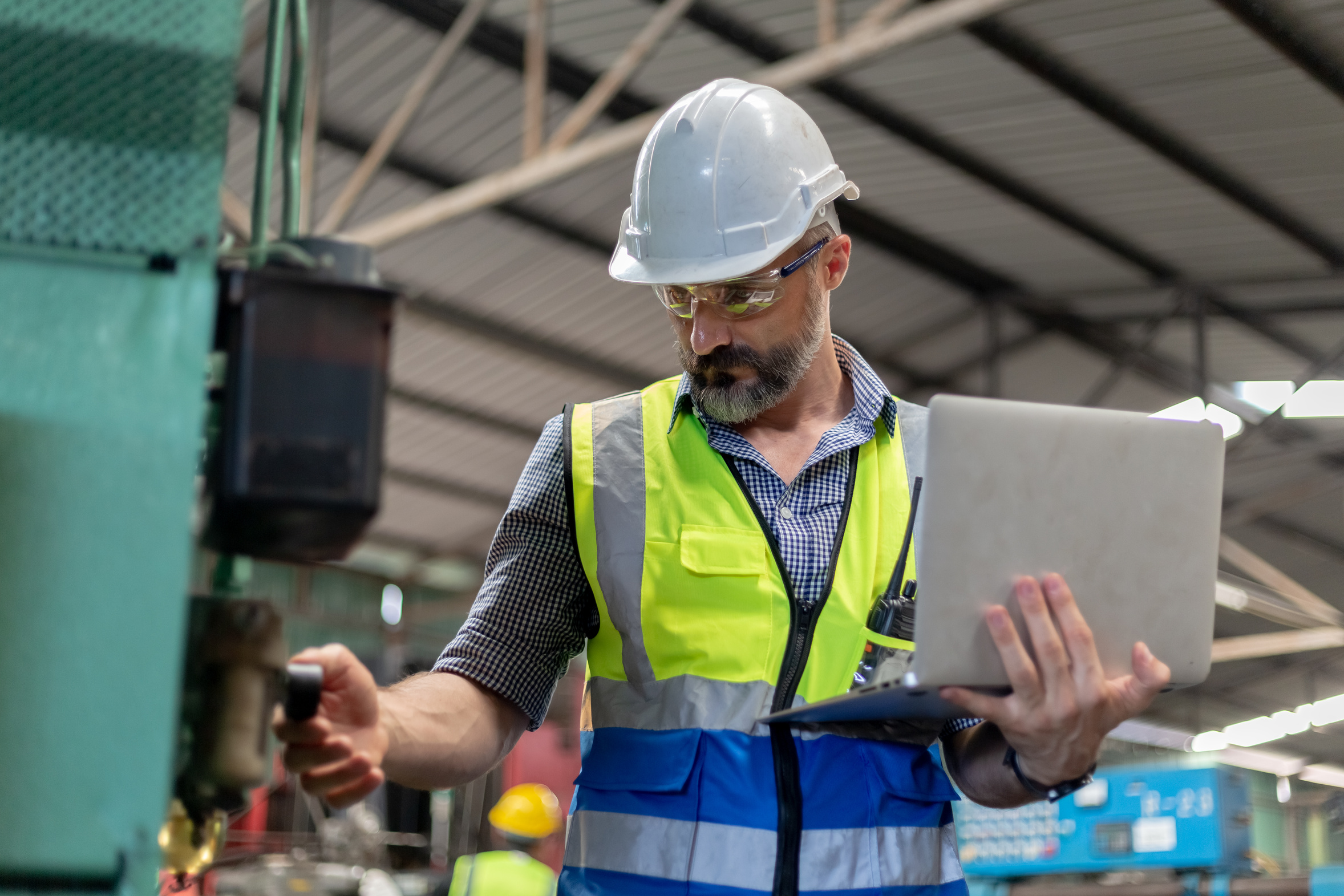


Start With the Process, Not the Tool
A free 30-minute AI Readiness Conversation, a measurable first pilot and governance built in from day one.
Get an IT Readiness AssessmentGet in Touch

Phone Number

Building Address
By appointment only, 24 Maple Ave, Barrie, Ontario

Business Hours
Monday to Friday, 9am to 6pm
Saturday and Sunday, closed
Request your free assessment
Tell us a little about your business and what prompted the change.
No obligation. We reply within one business day.
Trusted by


Book Your Free 30-Minute IT Readiness Assessment
Leave your details and an ACT360 teammate will call you back within one business day to book it. No obligation.